FPSO Liza Destiny UWILD Valve Replacement
Location: Offshore Georgetown, Guyana
Duration: July to August 2024
Client: SBM Offshore
Role: Diving Contractor
Water Depth: 0 m to 25 m

Project Overview
OSC Marine was appointed as the diving contractor for UWILD (Underwater Inspection in Lieu of Drydocking) valve replacement support works on the FPSO (Floating Production, Storage, and Offloading) Liza Destiny, located offshore Georgetown, Guyana. The project involved the blanking off of selected sea chests and hull penetrations to enable internal valve servicing and replacement activities onboard the FPSO.
The works required careful planning, controlled subsea execution, and close coordination between the dive team operating from the daughter craft and the valve change-out team onboard the FPSO. Diving operations commenced on 25 August 2024 with the blanking of starboard bow Sea Chest. This was followed by the blanking of apertures in the port stern area, with the final dive completed on 19 September 2024.
A total of 28 dives were conducted, with 1,457 minutes of total diving time recorded. The project was completed with zero diving or topside incidents.
Scope of Work
The main scope was to provide diving support for internal valve service and replacement by safely isolating selected sea chest and hull penetration areas from the external seawater environment.
The scope included:
- General visual inspection of the worksite
- Cleaning of sea chest and hull areas
- Blanking off sea chests and hull penetrations
- Installation and removal of subsea blanks, plugs, and top hats
- Support for internal valve service and replacement
- Visual recording using diving cameras and GoPro cameras
Marine fouling identified and removed during the works included green slime and acorn barnacles. Cleaning was completed using mechanical scraping tools to ensure the subsea blanks and sealing interfaces were free from obstruction.
Diving Equipment and Support
OSC Marine supplied air diving personnel and equipment, nitrox diving personnel and equipment, and a fully fitted diving daughter craft.
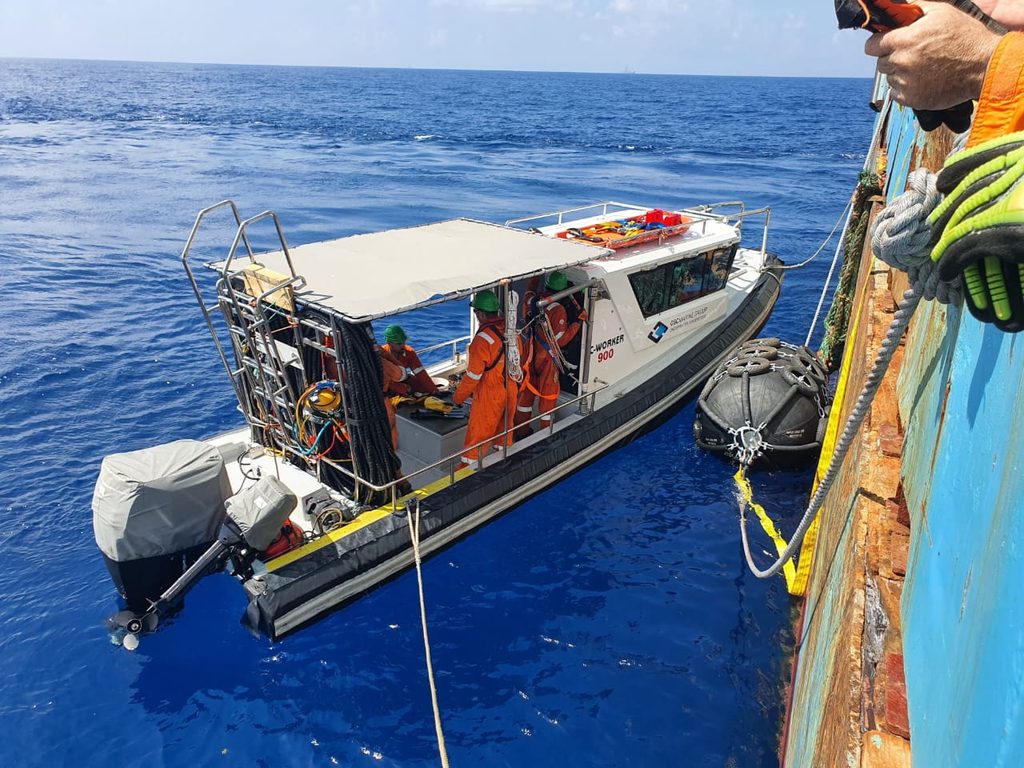
All diving activities were conducted from the daughter craft C-Worker 1, with the mother vessel Maersk Nomad positioned nearby to support the operation and provide emergency recompression capability if required.
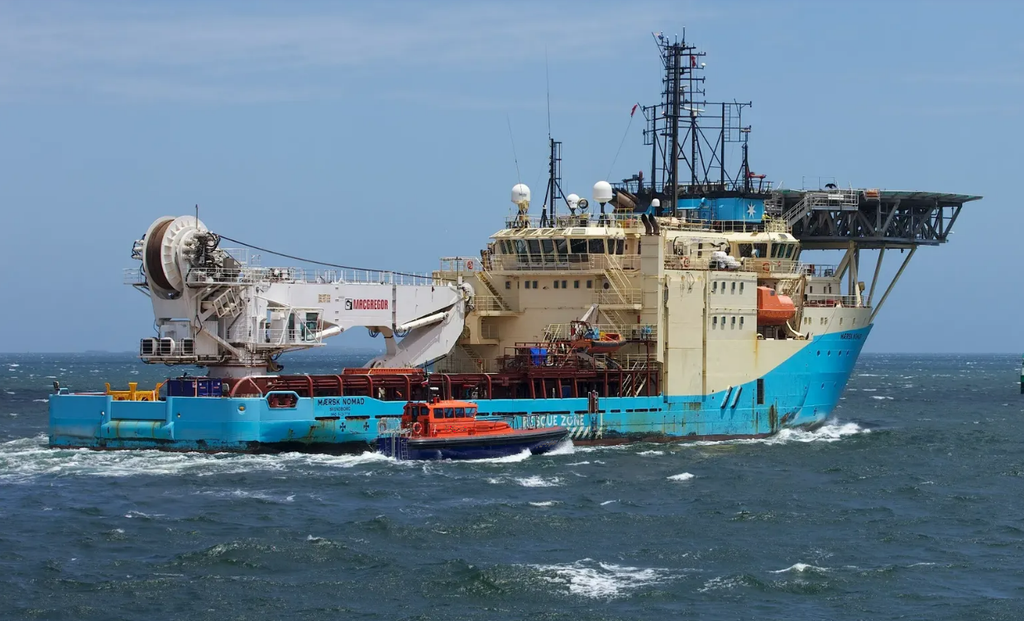
The diving spread was arranged to comply with applicable IMCA, IOGP, and ExxonMobil requirements. Key assets included:
- Dive control and air control panel installed in the daughter craft
- Air machinery and equipment storage container on the mother vessel
- Deck decompression chamber on the mother vessel
- Second deck decompression chamber on FPSO Liza Destiny
- Personal dive gear
- Subsea cleaning tools
- Mooring ropes, Yokohama fender, and mooring magnets
The daughter craft was a purpose-built 10 m diving workboat fitted with diesel outboard engines, integrated high-pressure gas storage, and a DNV offshore lifting cradle.
Execution Methodology
The daughter craft was launched from the mother vessel using the vessel crane and lifting cradle. Once deployed, the craft was moored alongside the FPSO using a Yokohama fender arrangement to create a stable working position and support safe diver access.
Downlines and guidelines were installed near the worksite to control the movement and positioning of the subsea blanks. Weights were used to help keep the guidelines and blanks clear of the FPSO side shell during installation.
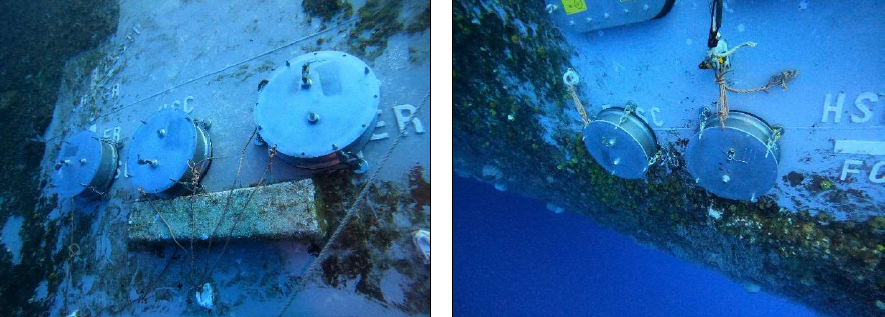
Before blank installation, the FPSO side shell, sea chest gratings, and lugs were cleaned to ensure there was no obstruction or damage risk to the neoprene gaskets beneath the blanks. This preparation was essential to achieve a watertight seal between the blank and the vessel hull.
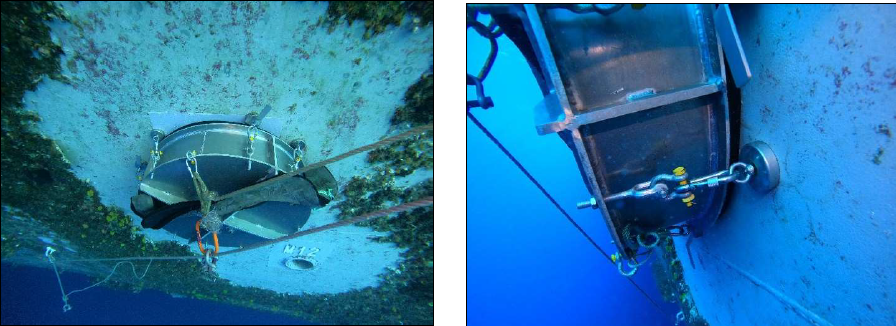
The blanks were transferred from the daughter craft, attached to the downline, moved onto the guidelines, and guided into position by the diver. Once correctly aligned, the blanks were secured over the sea chest or aperture to support the internal valve change-out works. Removal was completed using the reverse process.
Variation Works
During the campaign, the dive team was requested by the SBM Offshore Project Manager to inspect a possible crack-like indication identified by the ROV (Remote Operated Vehicle) team during routine UWILD activities. The anomaly was located on the top toe of a horizontal weld on the port side, approximately 10 m above the bilge keel.
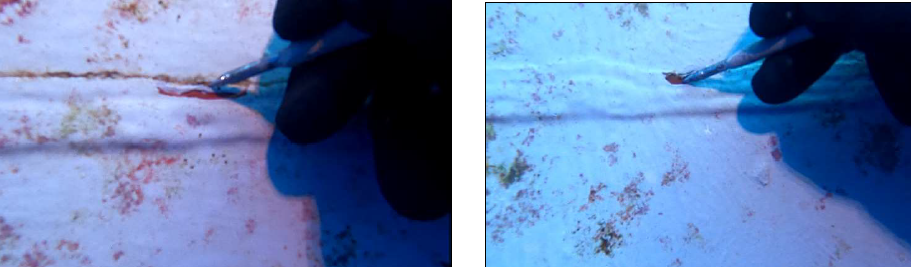
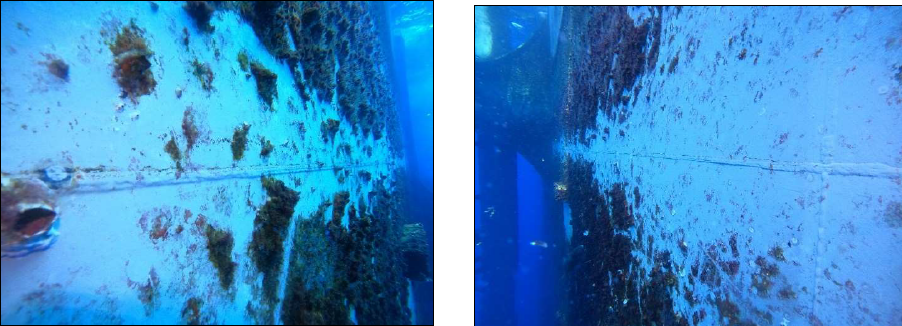
Following diver inspection, CCTV review, and video assessment, the indication was confirmed not to be a crack-like defect. It appeared to be residual discoloration in the weld toe after cleaning, possibly caused by oxidation or a reaction with remaining marine growth particles.
Additional variation works, including recovery of fallen debris and removal of possible fishing line entanglement from the starboard bow mooring chain to a water depth of 25 m, could not be completed due to time constraints and poor weather forecasts.
Safety and Project Outcome
All dives were conducted using breathing air with no in-water decompression required, in line with the project dive plan. The SBM Offshore dive representative was onboard the daughter craft during all dive operations and provided valuable operational input, with the ExxonMobil representative close at hand.
The project was completed safely, with no diving or topside incidents reported. Close collaboration between the daughter craft dive team, FPSO valve change-out team, SBM Offshore representatives, ExxonMobil representatives, and the Maersk Nomad crew contributed to the successful execution of the campaign.

Conclusion
The FPSO Liza Destiny UWILD Valve Replacement project demonstrated OSC Marine’s ability to deliver safe, controlled, and technically coordinated diving support for offshore FPSO maintenance works.
Through detailed planning, experienced diving personnel, purpose-built daughter craft operations, and strong collaboration with all project stakeholders, OSC Marine successfully supported the sea chest and hull penetration blanking works required for internal valve service and replacement offshore Guyana.