Gas-to-Energy Project – FPSO Liza Destiny
Location: Offshore Georgetown, Guyana
Duration: July 2024
Client: TechnipFMC for ExxonMobil
Role: Diving Contractor
Water Depth: Approximately 27 m
Diving Method: 36% Nitrox diving
Work Platform: Bespoke diving platform installed on the FPSO

Project Overview
OSC Marine was appointed as the diving contractor for subsea installation and pre-commissioning activities supporting the Gas-to-Energy Project on the FPSO Liza Destiny, offshore Georgetown, Guyana.
The campaign involved worksite inspection and cleaning, the installation of subsea equipment, remote monitoring support, pre-commissioning of the Pig Launching and Recovery module, and the connection of a tie-in spool to the riser.
All diving activities were completed from a bespoke diving platform fitted to the FPSO. The diving team used 36% Nitrox, generated onboard using a Nuvair compressor and machinery package mobilised specifically for the project.
Diving operations commenced on 12 July 2024, with the final dive completed on 31 July 2024.
Scope of Work
The project scope included:
- General visual inspection of the subsea worksite
- Cleaning using a Caviblaster unit
- Inspection of rigging and mechanical interfaces
- Installation of the tie-in spool clamp
- Installation of auxiliary sheaves
- Installation of two subsea cameras
- Pre-commissioning of the Pig Launching and Recovery module
- Testing of communication and valve integrity
- Disconnection and recovery of the pull head
- Installation of the tie-in spool onto the riser
- Subsea hydraulic bolt tensioning of the interface flanges
The works required close coordination between OSC Marine’s diving team and representatives from ExxonMobil, SBM, and TechnipFMC.
General Visual Inspection and Cleaning
Before equipment installation commenced, the diving team completed a general visual inspection of the worksite.
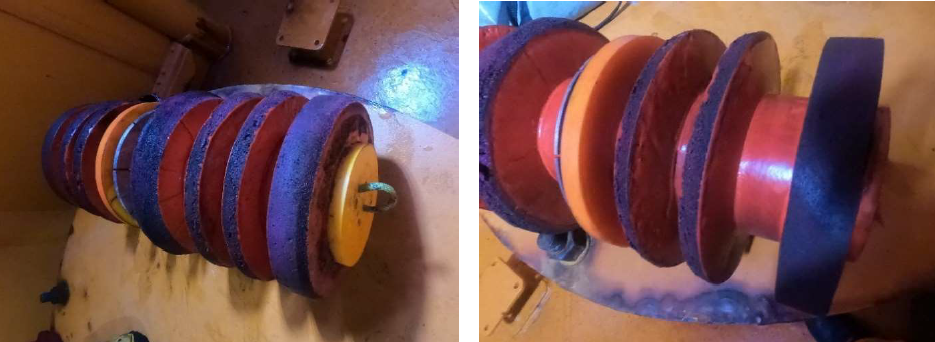
The area was cleaned using a Caviblaster unit to remove marine fouling and other potential obstructions. Marine growth encountered during the campaign included:
- Slime
- Acorn barnacles
Cleaning and inspection were completed to ensure that the rigging and mechanical interfaces were clear and ready for installation activities.
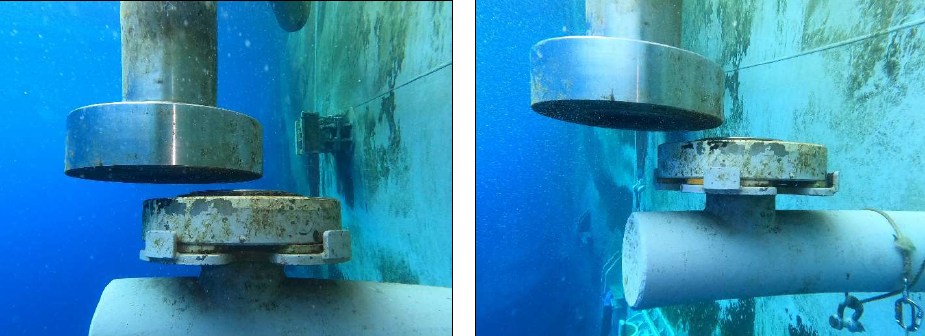
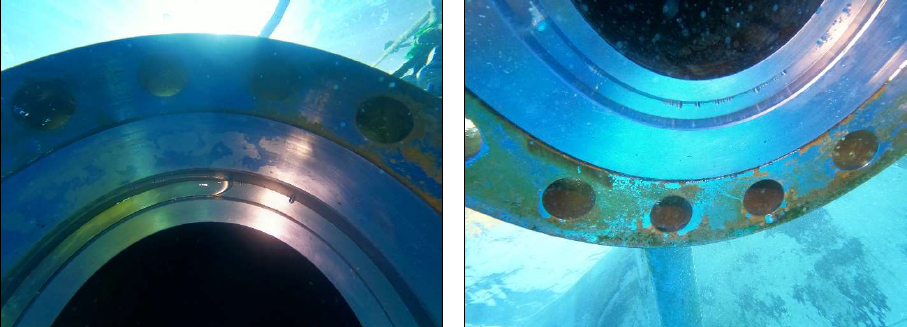
Particular attention was given to the interfaces associated with:
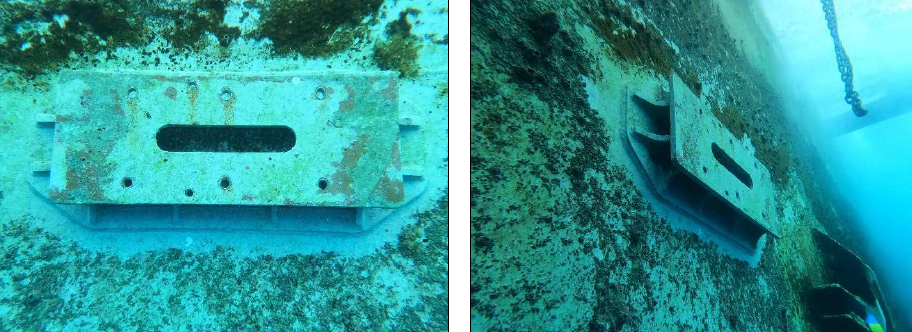
Clamp Base Plate:
Before cleaning:

After Cleaning:
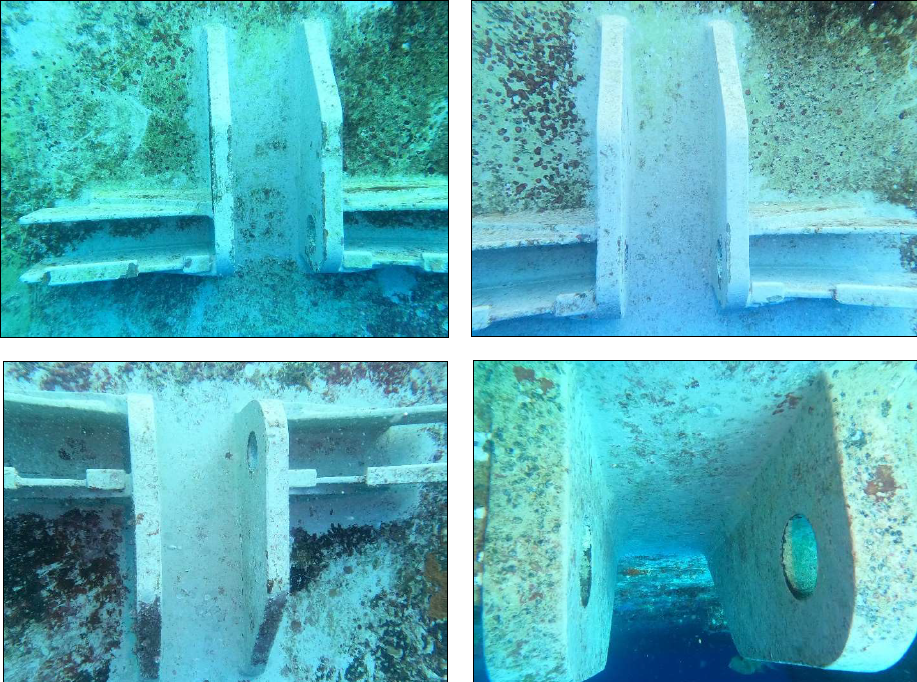
Auxiliary sheaves:
Before Cleaning:
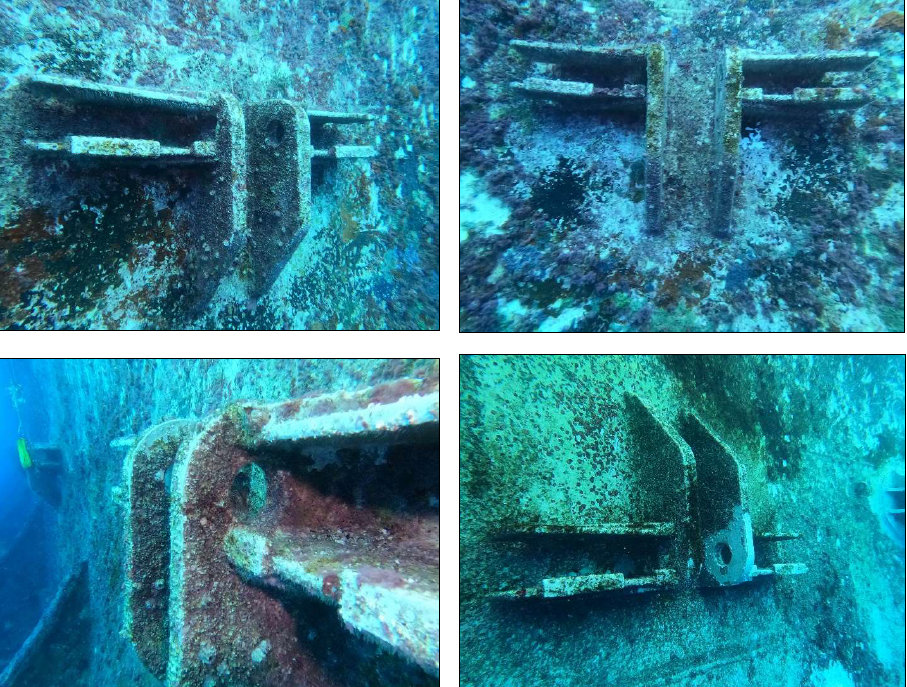
After cleaning:
Riser receptacle
Before cleaning:

After cleaning:
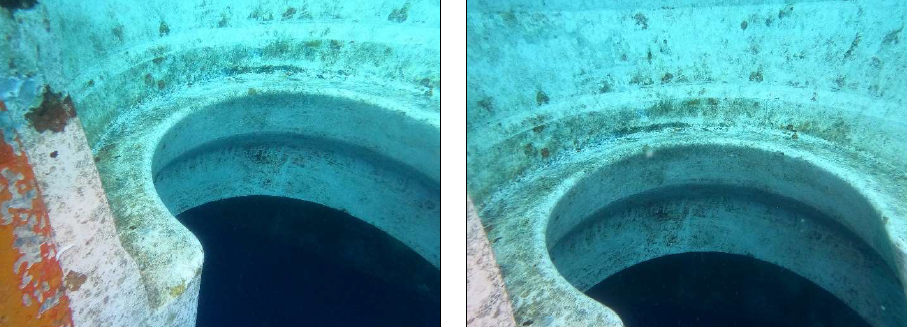
Tie-in spool flange
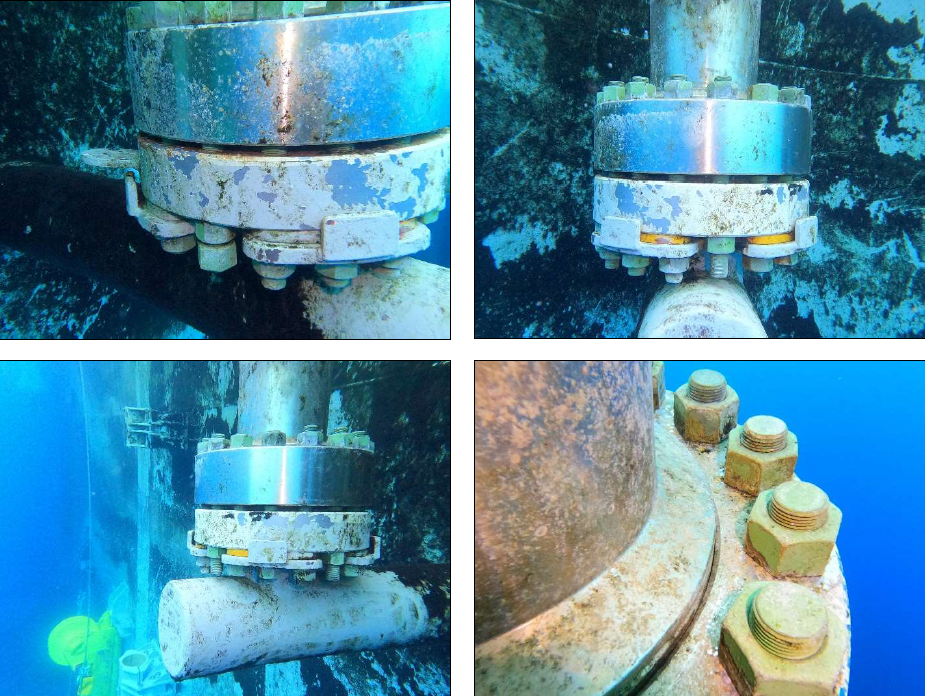
Removing obstructions helped prevent interference with the installation equipment and reduced the risk of marine growth affecting the positioning or performance of the rigging and mechanical components.
Tie-In Spool Clamp and Auxiliary Sheaves
Following worksite preparation, the tie-in spool clamp and auxiliary sheaves were rigged and transferred overboard.
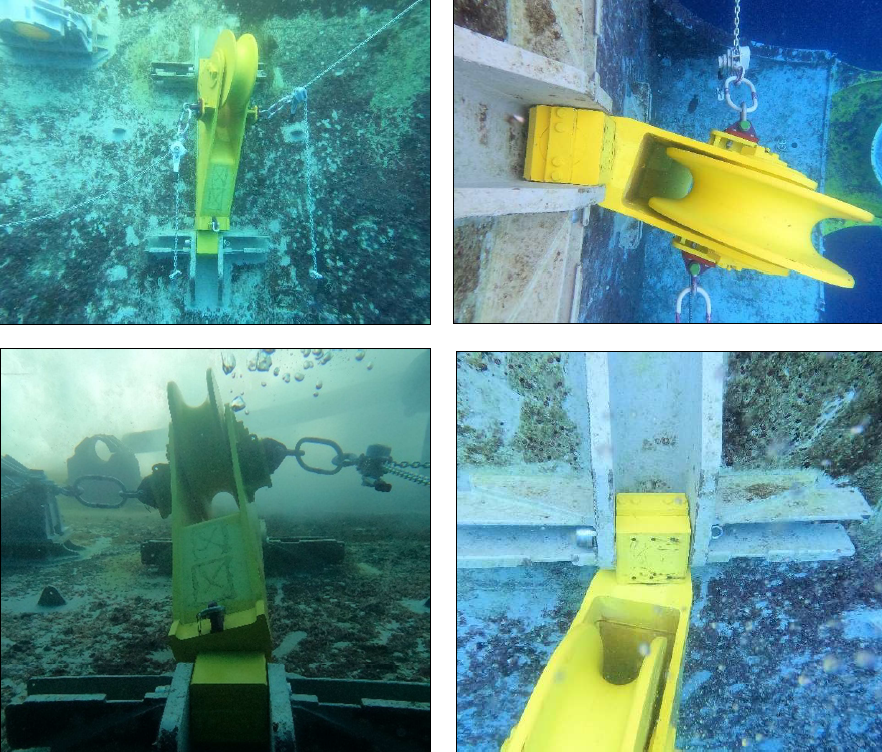
The equipment was deployed using:
- RPS crane
- Installation winches
- Subsea rigging
- Diver guidance and positioning support
The diving team guided the equipment into position and installed it on the side shell of the FPSO.

This equipment supported the controlled handling and installation of the tie-in spool and riser connection components.
Subsea Camera Installation
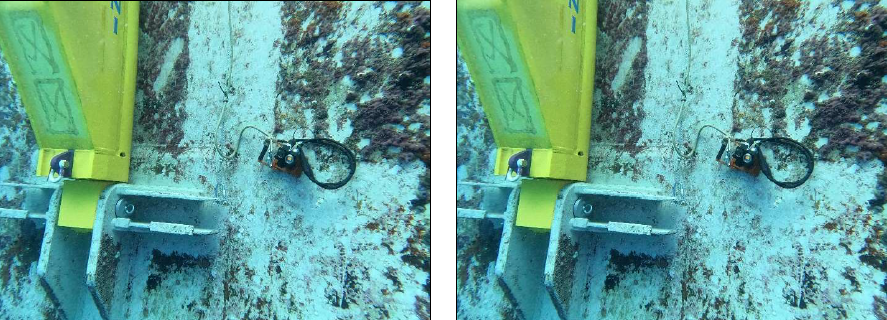
Two subsea cameras were installed to provide the client with remote visual coverage of the riser installation into the receptacle.
The camera system enabled the installation activities to be observed from the surface and provided additional visual information during critical stages of the operation.

The subsea camera installation supported:
- Remote client viewing
- Monitoring of riser positioning
- Observation of the riser-to-receptacle interface
- Improved visibility during installation activities
Pig Launching and Recovery Module
The Pig Launching and Recovery module was fitted to the pull head and pre-commissioned before the pull head was disconnected and recovered.
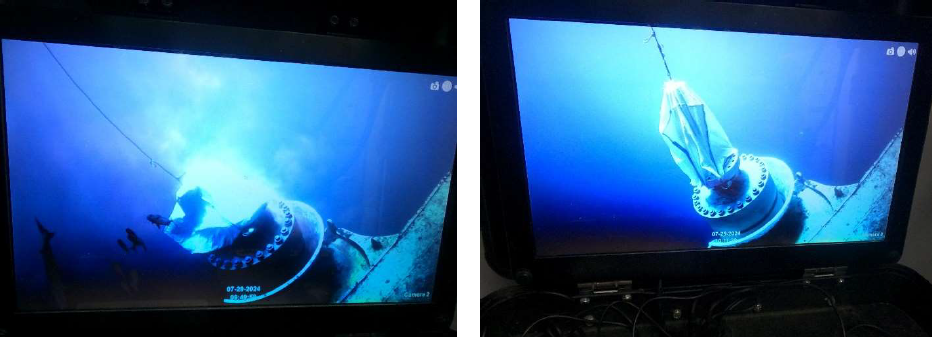
The diving and project teams used SPAMM (Subsea Pressure and Monitoring Manifold) panels to:
- Test communication with the module
- Confirm the integrity of the module valves
- Verify the system before riser flooding
- Support pull head disconnection
- Prepare the pull head for recovery to the surface
These checks were completed before flooding the riser, helping confirm the readiness of the module and its valves before progressing to the next phase.
Tie-In Spool Installation
OSC Marine’s dive team assisted the SBM team with the positioning and installation of the tie-in spool onto the riser.
The installation sequence included:
- Rotating the tie-in spool into the required orientation
- Lowering the spool towards the riser
- Guiding the spool into its final position
- Securing the spool at the riser interface
- Aligning the riser-spool flanges
- Conducting subsea hydraulic bolt tensioning
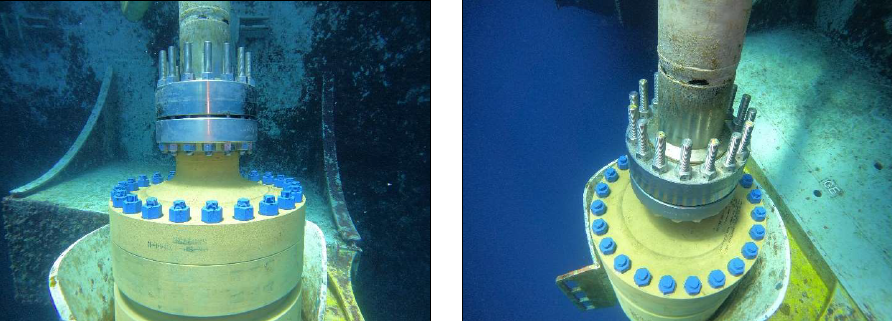
Subsea hydraulic bolt tensioning was completed on the riser-to-spool interface flanges to secure the final connection.
Effective communication between the diving, lifting, installation, and surface teams was essential throughout the operation.
Nitrox Diving Operations
The project was completed using 36% Nitrox as the diving gas. Nitrox was generated through a Nuvair compressor and machinery package mobilised onto the FPSO.
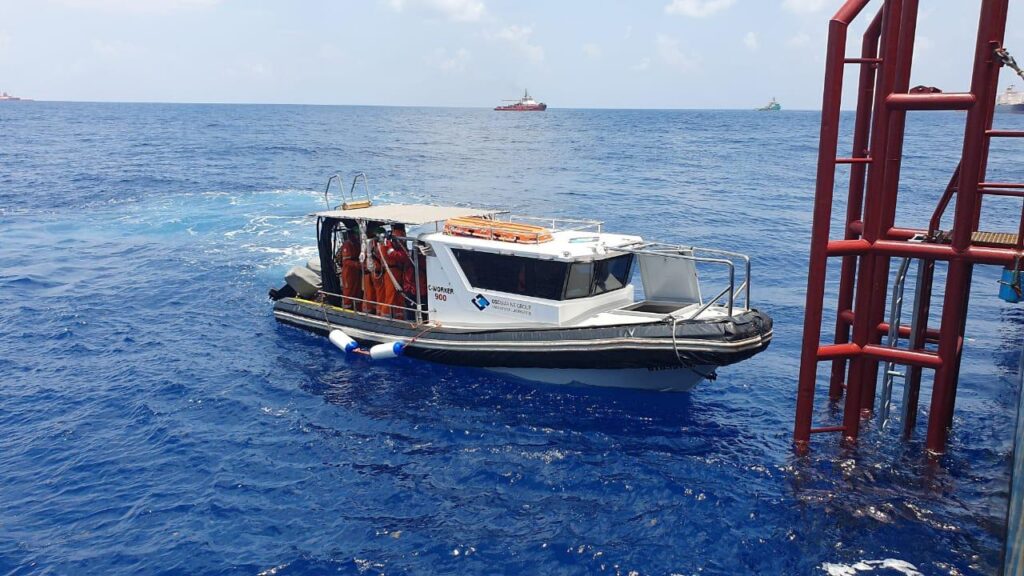
All dives were conducted from the purpose-built diving platform installed on the FPSO. The diving campaign achieved:
- 62 completed dives
- 5,718 minutes of total dive time
- No decompression diving
- Zero diving incidents
- Zero topside incidents
No decompression diving was required in accordance with the approved project dive plan.
ExxonMobil and SBM dive representatives were present during all diving activities. TechnipFMC representatives were also present to witness critical diving phases.
Project Outcome
OSC Marine successfully completed the diving scope required to support the Gas-to-Energy Project on FPSO Liza Destiny.
Key deliverables included:
- Inspection and cleaning of the subsea worksite
- Installation of the tie-in spool clamp and auxiliary sheaves
- Installation of two subsea monitoring cameras
- Pre-commissioning of the Pig Launching and Recovery module
- Testing of communication and valve integrity
- Installation of the tie-in spool onto the riser
- Hydraulic tensioning of the riser-spool flange connection
Conclusion
The project demonstrated OSC Marine’s ability to deliver technically demanding Nitrox diving operations from a bespoke FPSO-mounted diving platform.
Through detailed worksite preparation, experienced diver intervention, coordinated subsea installation, and close stakeholder collaboration, the team completed the required scope with no decompression diving and no diving or topside incidents.