Hull Cleaning & Biotic Evaluation of Skandi Vitoria
Location: Saldanha Bay, South Africa
Duration: 4 to 11 June 2022
Client: Technip UK Limited
Role: Hull Cleaning Contractor
Project Overview
OSC Marine was appointed to undertake the underwater hull cleaning and biotic evaluation of the multipurpose vessel Skandi Vitoria at the inner anchorage of Saldanha Bay Harbour.
The vessel had recently operated in subtropical waters along the Mozambique coastline and was preparing to enter Brazilian waters. Hull cleaning and biological evaluation were therefore required to assess its condition and support compliance with applicable Brazilian biofouling requirements, including protocols concerning the prevention and control of exotic marine species.
Attention was given to the possible presence of invasive sun corals, including Tubastraea coccinea and Tubastraea tagusensis.
OSC Marine supplied:
- Air diving personnel and equipment
- Hull cleaning equipment
- Dive support vessels
- Environmental monitoring support
- Independent environmental scientists
Two scientists from SDP Ecological and Environmental Services monitored the survey and cleaning activities and evaluated the vessel’s hull from a biological perspective.
Scope of Work
The project combined underwater cleaning, biological assessment, environmental monitoring, and post-clean verification.
The scope included:
- Pre-cleaning inspection of the hull and niche areas
- Photographic and video documentation
- Identification of marine growth
- Propeller polishing
- Removal of macrofouling
- Cleaning of the hull and submerged niche areas
- Recovery and filtration of removed biological material
- Analysis of recovered material
- Water quality sampling
- Post-cleaning inspection
- Verification of the absence of Tubastraea species
The main areas cleaned included:
- Flat bottom, from bilge keel to bilge keel
- Side bottom, from the bilge keel to scantling draught
- HiPAP positioning system
- Sea chests
- Thrusters
- Moon pool
- Rope guard
Pre-Cleaning Survey
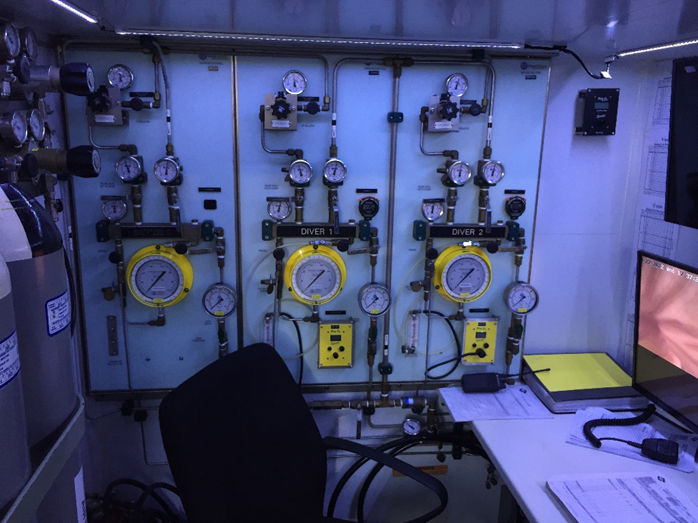
The pre-cleaning survey was completed using diver-held cameras and a head-mounted video system linked to the surface monitoring station.
The dive supervisor directed the commercial divers around the hull and niche areas, while the onboard scientists reviewed the live footage and guided closer investigation of areas where invasive coral species could potentially occur.
The survey was used to:
- Assess the extent and distribution of macrofouling
- Identify dominant marine species
- Determine whether organisms were living, dead, or deteriorating
- Select suitable cleaning tools for different hull areas
- Examine low-light and protected niche areas
- Check specifically for Tubastraea species
Still photographs and video footage were retained for technical and scientific review.
Hull Cleaning Methodology
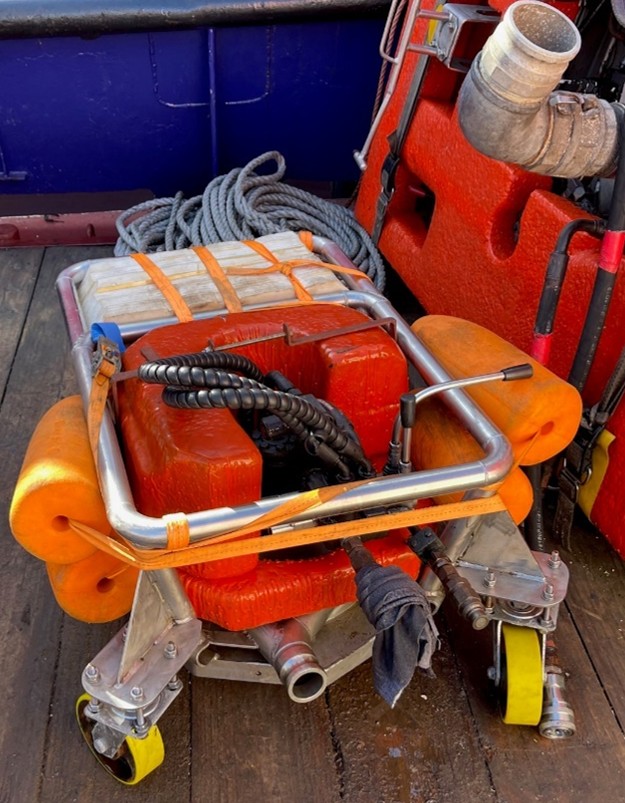
The primary cleaning system was the diver-operated E300 brush cart, which uses rotating brushes and a bristle boundary shroud to maintain controlled contact with the hull. The cart was moved systematically across the hull to remove macrofouling while limiting scouring of the antifouling coating.
Smaller rotary brushes and specialised tools were used in restricted or irregular areas, including:
- Anodes
- Rope guard
- Sea chest areas
- Other submerged niches inaccessible to the E300 cart
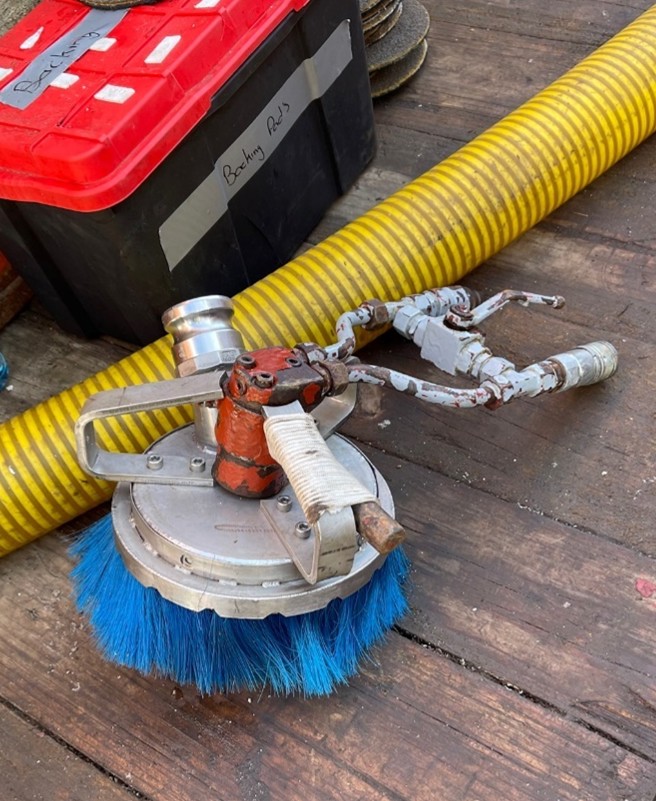
Removed marine growth was drawn through the cleaning system and transferred to a filtration unit aboard the primary tender vessel.
Filtration and Environmental Monitoring
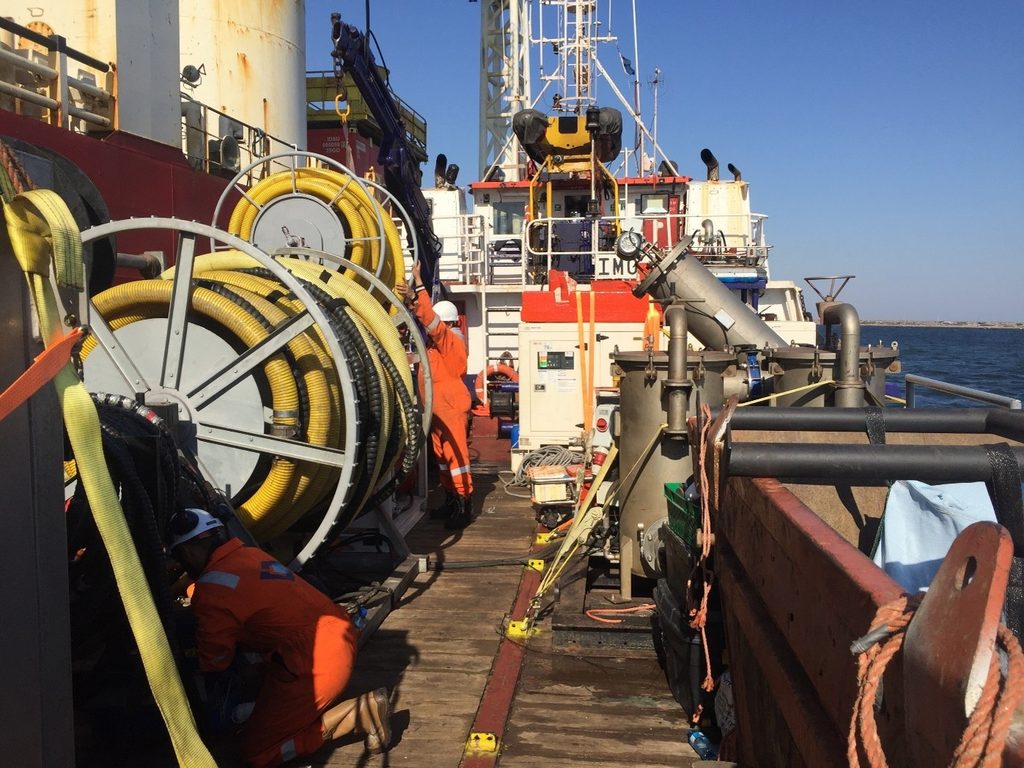
Cleaning operations were directed from the SS Seacarrier, which carried the E300 machinery, filtration system, and supporting equipment. The support vessel remained moored alongside Skandi Vitoria to provide access to the submerged hull.
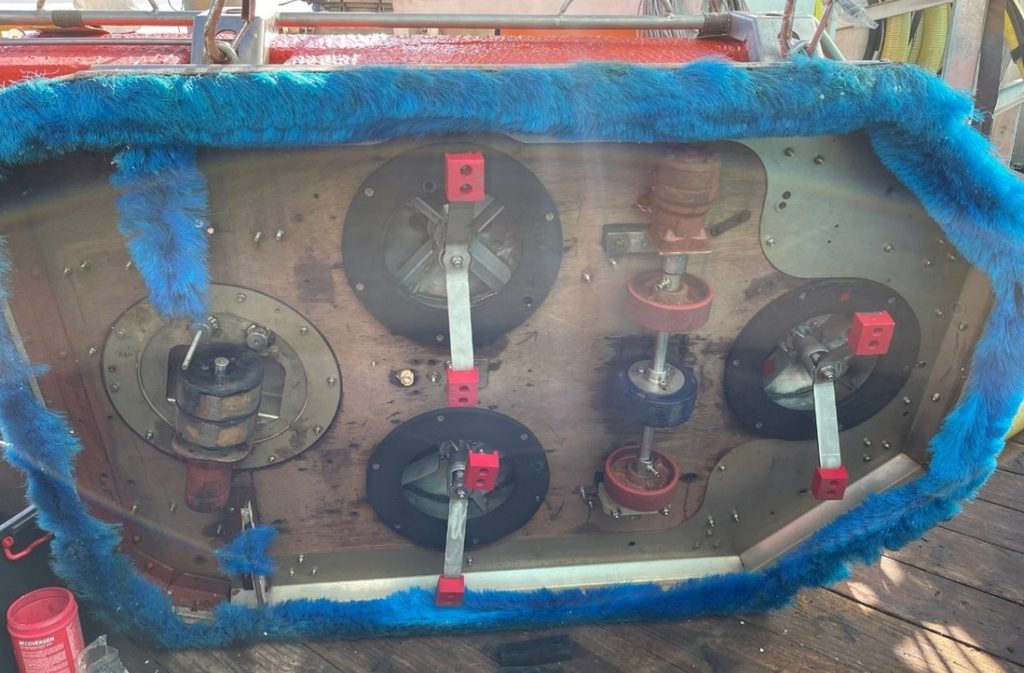
A second tender craft, C Worker 1, supported:
- Movement of personnel and equipment
- Water quality sampling
- Environmental monitoring
- Emergency standby requirements
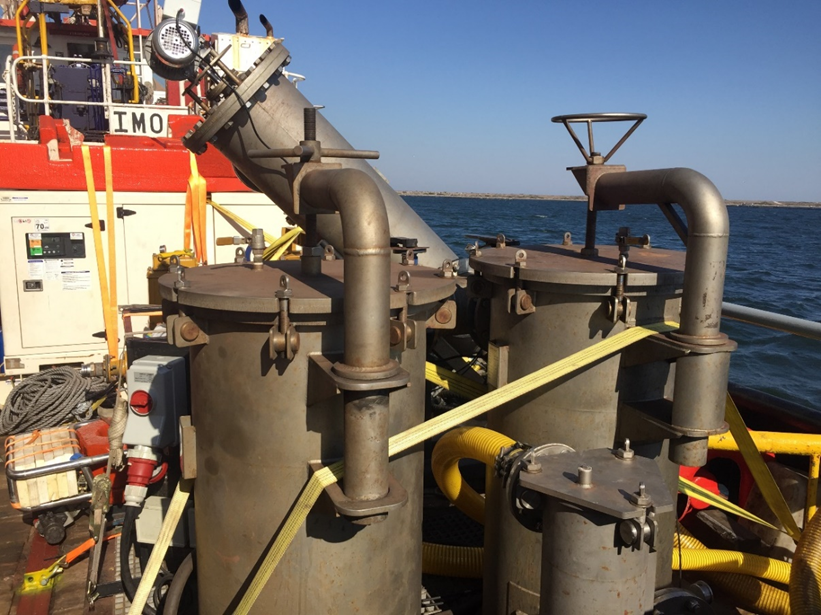
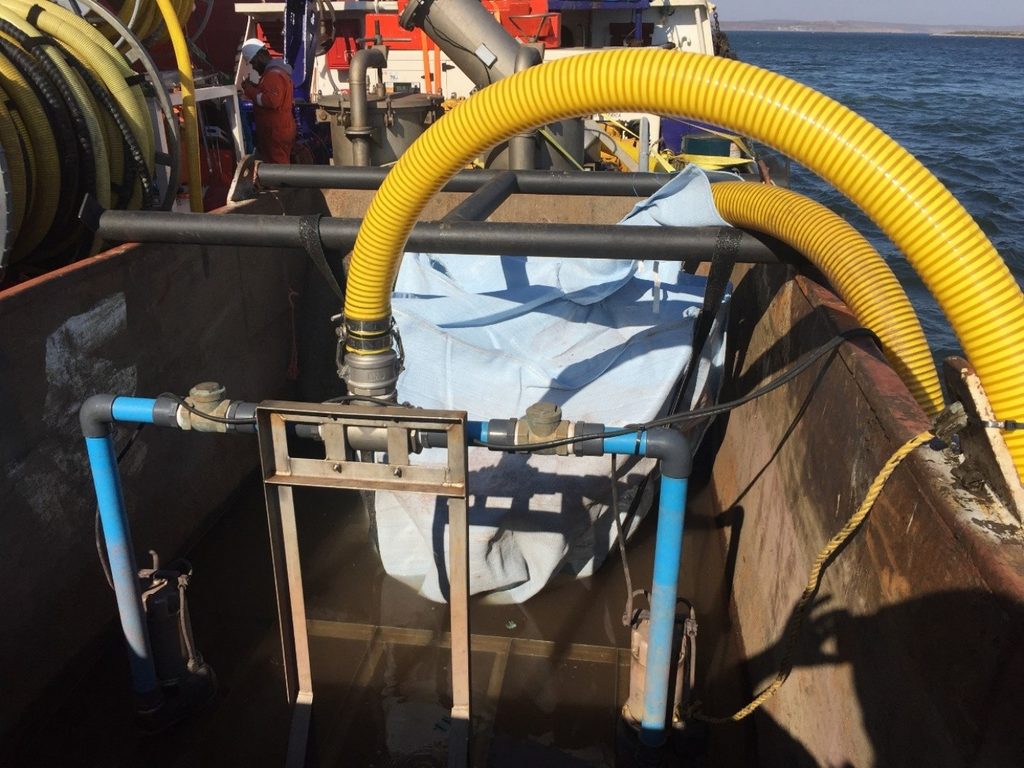
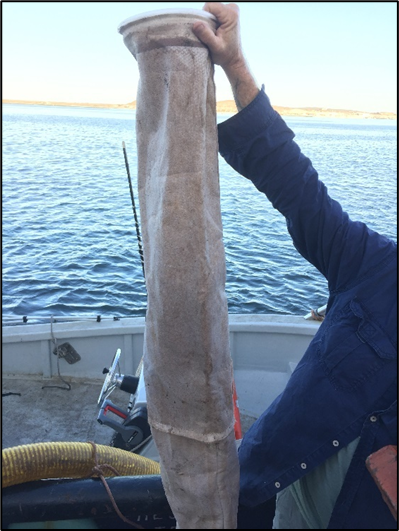
Water and recovered material from the cleaning system passed through a series of filters ranging from 50 µm to 10 µm. Captured biological and solid material were collected in waste-retrieval bags for disposal at a licensed waste facility. Filtered water was then discharged back into the marine environment.
Unutilized filter bag:
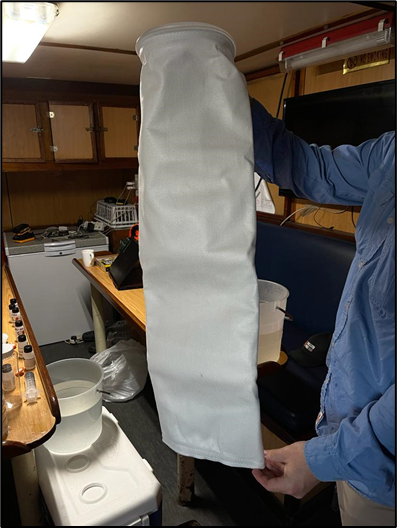
Utilized filter bag:
Water samples were collected from ambient waters and from the cleaning system’s intake and discharge streams. Samples were submitted to Elements Laboratory for analysis.
Biological Findings
The pre-cleaning inspection found limited macrofouling across the hull. The fouling was assessed as patchy but visible, covering approximately 6% to 15% of the submerged surfaces.
Observed growth included:
- Biofilm
- Green and brown algae
- Goose barnacles
- Acorn and purple barnacles
- Tube worms and other polychaetes
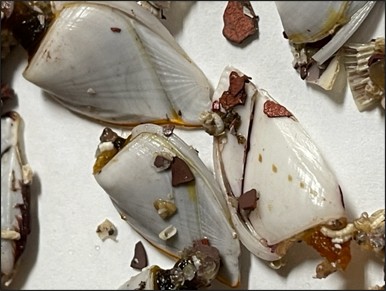
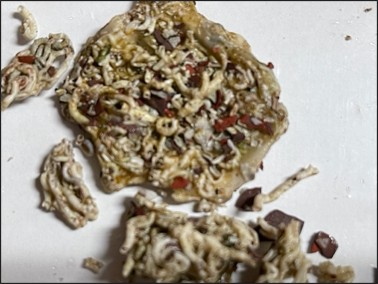
Most macroinvertebrates observed were dead, deteriorating, or senescent. The relatively low fouling level was attributed to several factors, including:
- Dry docking during 2021
- Hull cleaning in Walvis Bay in January 2022
- Performance of the vessel’s antifouling coating
- Exposure to colder water in Saldanha Bay
Most importantly, the surveys found no evidence of Tubastraea species or other members of the Dendrophyllidae family on the hull or within the inspected niche areas.
Project Outcome
The cleaning operations were completed over six days, followed by scientific evaluation and reporting. Post-cleaning imagery was reviewed to assess cleaning effectiveness and confirm the biological condition of the vessel.
The campaign successfully delivered:
- Cleaning of the principal hull and niche areas
- Recovery and filtration of removed fouling
- Independent biological oversight
- Environmental water sampling
- Pre-clean and post-clean visual records
- Confirmation that invasive sun coral was not detected
Conclusion
The Skandi Vitoria project demonstrated OSC Marine’s ability to combine controlled underwater hull cleaning with scientific monitoring and responsible biofouling management.
Through experienced air diving teams, specialised cleaning and filtration equipment, environmental sampling, and independent biological evaluation, OSC Marine prepared the vessel for its planned entry into Brazilian waters while meeting the applicable environmental requirements.