Inspection & Thruster Replacement: Drill Ship COSL Prospector
Project: Fouling Inspection and Thruster Replacement
Location: Port of Ngqura, South Africa
Duration: 31 March to 16 April 2019
Client: COSL Offshore Management AS
Vessel: Drill Ship COSL Prospector
Scope of Work
The project scope included two primary work areas:
- Hull fouling inspection
- Thruster replacement support
OSC Marine supplied experienced commercial diving personnel and air diving equipment to support the inspection and underwater intervention works. The operation also required a dive station unit, hyperbaric chamber, high-pressure washer, power supply, lifting arrangement, hydraulic strand jacks, hang-off wire, offshore shackles, master links, and a support vessel, crane, or barge for thruster handling.
Due to the size and weight of the propulsion equipment, detailed planning was required before diving activities commenced. The Rolls-Royce Aquamaster UUC 355 azimuth thruster involved in the operation weighed approximately 33.5 tons in water and 46 tons in air.
Inspection Methodology
Before the dive campaign began, all parties participated in operational planning and safety discussions. These included reviewing weather conditions, water visibility, diving limitations, thruster recovery procedures, lifting arrangements, mooring requirements, and task-specific risk assessments.
A Safe Job Analysis and Task Risk Assessment process was completed to ensure all personnel understood the operational sequence, lifting plan, diver safety requirements, and responsibilities before work began.
The inspection focused on key underwater areas of the vessel, including the thrusters, selected sea chests, port pontoon, and starboard pontoon.
Marine Growth Findings
The vessel was found to be clean in the majority of inspected areas. Where marine growth was observed, it was limited and consisted mainly of:
- Acorn barnacle footprints
- Gooseneck barnacles
- Green slime
Overall, the hull condition was favourable, with only isolated areas requiring cleaning attention.
Thruster Inspection and Replacement
Each thruster was inspected as part of the fouling assessment.
Thruster 1 was identified as a new installation.
Thruster 2 was found to be clean, with no visible marine growth. Some barnacle footprints remained on the paintwork.
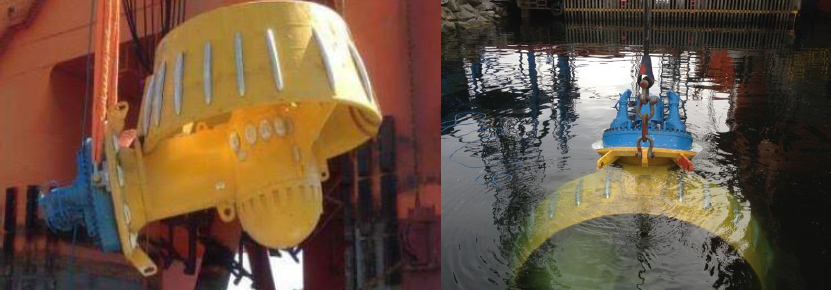
Thruster 3 required the most intervention. During the initial inspection, an isolated area of hard acorn barnacle growth was found on the rope guard at the 6 o’clock position. The growth was approximately 2 mm thick. As part of the operation, the Rolls-Royce Aquamaster UUC 355 thruster was removed, the seal was replaced, and the rope guard was cleaned before the thruster was re-installed.
Thrusters 4, 5, and 6 were confirmed to be clean, with no visible growth present. Barnacle footprints were noted on the paintwork following cleaning.
The successful removal, cleaning, seal replacement, and re-installation of Thruster 3 formed a key part of the project’s technical execution.
Sea Chest Inspection
Sea chests 4, 5, 6, 7, and 12 were inspected. The general finding was that no marine growth was present externally, and where internal visibility allowed, the sea chests were also found to be clean.
For some sea chests, the internal inspection was limited due to restricted visibility. The inspection was also limited to sea chests that could be safely isolated. Areas that could not be isolated were excluded from diver inspection for safety reasons.
Sea Chest 12 was confirmed to be clean both externally and internally.
Pontoon Inspection
The port and starboard pontoons were inspected to determine the level of marine growth present. Both pontoons showed a low level of fouling, estimated at 0% to 5% coverage.
The growth consisted mainly of gooseneck barnacles and green slime. No significant cleaning intervention was required for these areas.
Safety and Project Outcome
The project was completed without any dive-related incidents. Weather and water visibility were suitable for the rig inspection and underwater works, allowing the team to complete the campaign safely under the guidance of the client representative.
Careful planning played an important role in the successful delivery of the project. Pre-dive planning covered the weather limitations, lifting plan, hang-off wire and shackle readiness, hydraulic strand jack arrangements, support vessel requirements, and safety briefings with all involved parties.
The inspection confirmed that the COSL Prospector was clean across the majority of inspected areas, with only minor and isolated marine growth identified. Thruster 3 was successfully removed, cleaned, fitted with a replacement seal, and re-installed.
Conclusion
The COSL Prospector project demonstrated OSC Marine’s ability to provide safe, reliable, and technically controlled underwater inspection and vessel maintenance support in a port environment.
Through experienced air diving personnel, detailed operational planning, and close coordination with the client, OSC Marine successfully completed the fouling inspection and thruster replacement support campaign at the Port of Ngqura.
The project was delivered safely, efficiently, and without dive-related incidents