Intelligent Pigging of 14” SPM Diesel Pipeline
Location: Mossel Bay, South Africa
Duration: 1 week, March 2021
Client: PetroSA
Role: Inspection Contractor
Pipeline Length: 3.4 km
Pipeline Route: Onshore Tank Farm to Offshore SPM PLEM
Project Overview
OSC Marine was appointed as the inspection contractor for the intelligent pigging inspection of a 14-inch diesel pipeline in Mossel Bay, South Africa. The pipeline runs from the onshore tank farm to the offshore Single Point Mooring Pipeline End Manifold and forms part of PetroSA’s fuel transfer infrastructure.
The project was completed over a one-week period in March 2021. The inspection run was carried out on 7 March 2021 using a Magnetic Flux Leakage inspection tool operated by LIN SCAN.
The purpose of the project was to assess the internal condition of the pipeline and provide inspection data to support condition reporting, fitness-for-purpose assessment, and recommendations for repair where required.
Scope of Work
The scope covered the intelligent pigging inspection of the 14-inch pipeline from the Mossel Bay tank farm to the offshore SPM PLEM.

The work included:
- Project management
- Field inspection personnel, including engineer and technician support
- Pigging and High-Resolution Magnetic Flux Leakage inspection equipment
- Inspection and condition reporting
- Fitness-for-purpose assessment
- Repair recommendations
The inspection formed part of a structured pipeline integrity process, using in-line inspection technology to collect internal condition data without removing the pipeline from service infrastructure.
Inspection Technology
Pipeline pigging is the process of sending a specialised device, known as a pig, through a pipeline to clean, inspect, or confirm the internal condition of the line.
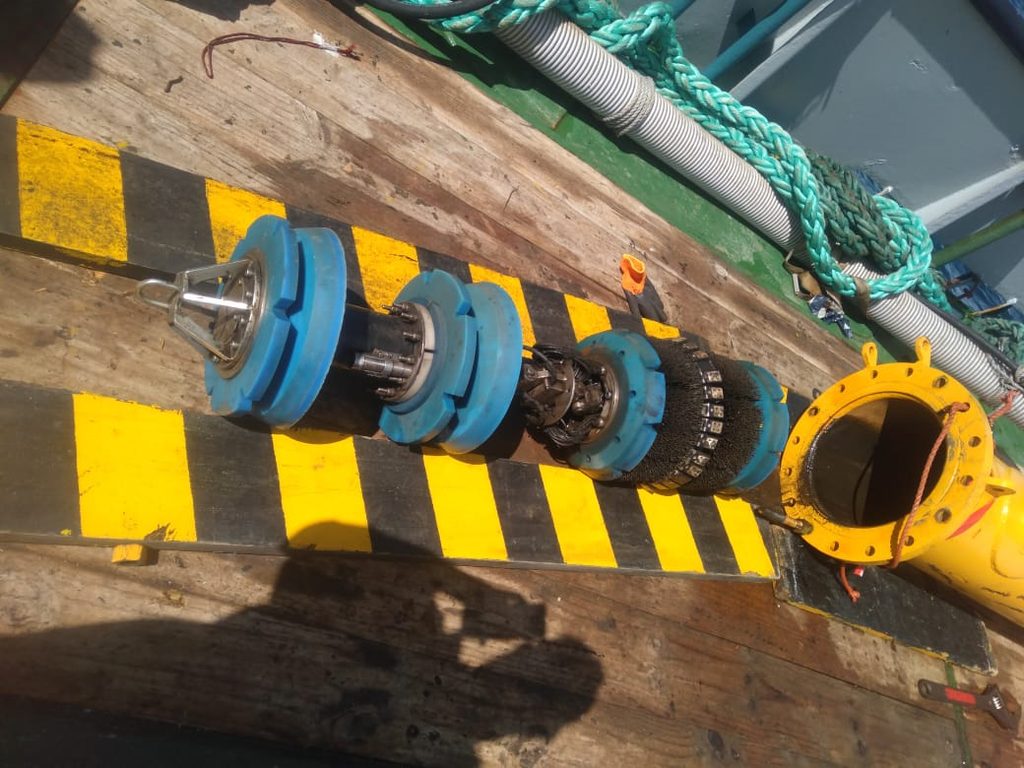
For this project, High-Resolution Magnetic Flux Leakage, also known as HR-MFL, was used. HR-MFL is an advanced non-destructive testing (NDT) method used to identify and assess potential metal loss and pipeline integrity concerns. The tool records data as it travels through the pipeline, allowing technical teams to evaluate the condition of the pipe wall.
Pre-Inspection Preparation
Before the MFL inspection run, the pipeline was prepared through gauging and cleaning activities. These runs were completed to confirm that the pipeline was clear and suitable for the inspection tool.
The gauging tool was fitted with an aluminium gauge plate sized to 90% of the minimum stated pipeline outside diameter. This confirmed that the inspection tool could safely pass through the pipeline.
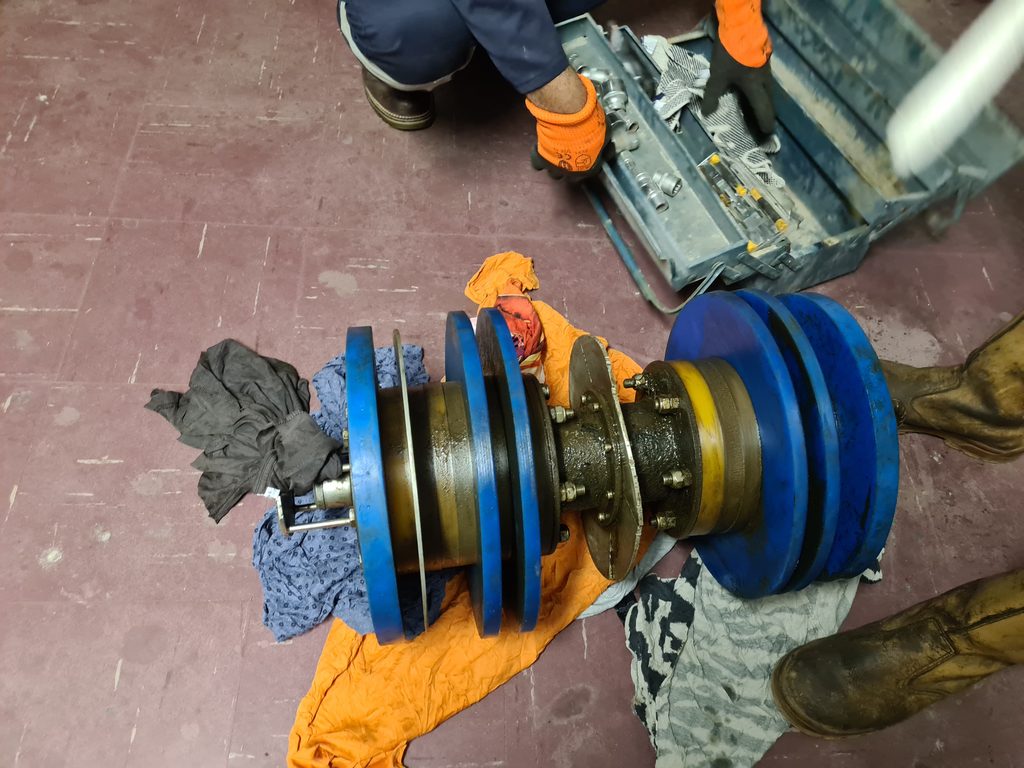
The gauging tool was received with no damage to the main gauge plate. Some damage was noted on the bend plate, but after assessment and measurement, LIN SCAN confirmed that the pipeline was acceptable for the MFL run.
Cleaning and profile runs were also completed before inspection. No debris was recovered, which supported the decision to proceed with the inspection.
MFL Inspection Run
The MFL tool was inspected by the on-site LIN SCAN crew before launch. Key components such as cups, odometer wheels, cabling, and related mechanical parts were checked and confirmed to be in good condition.
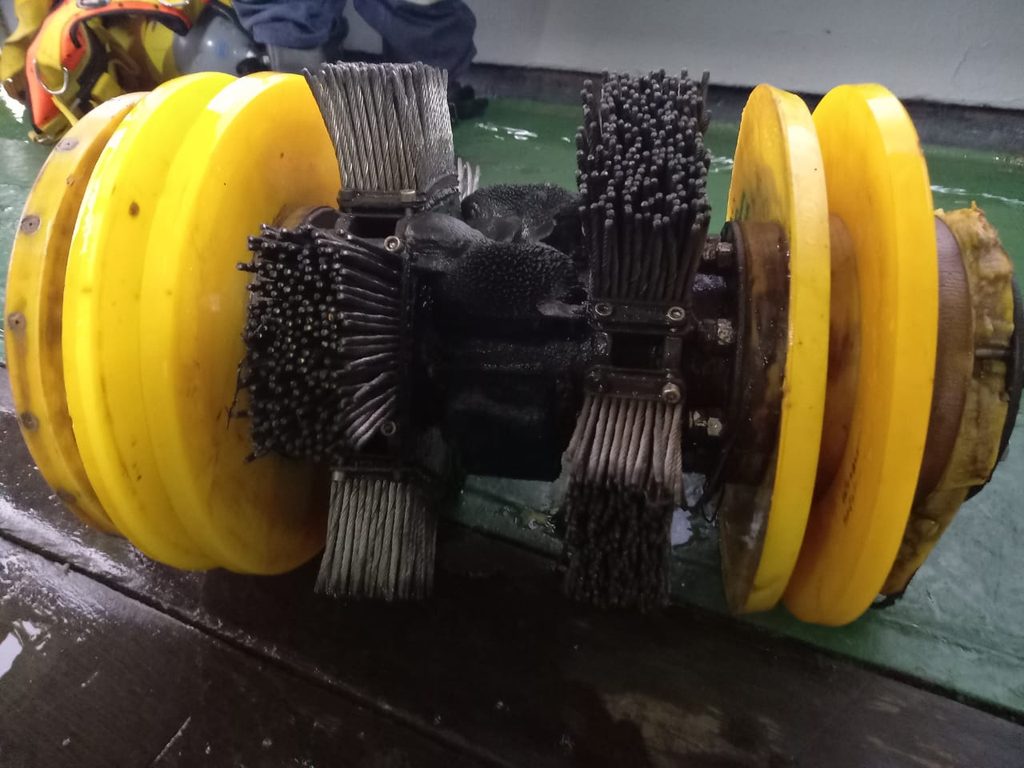
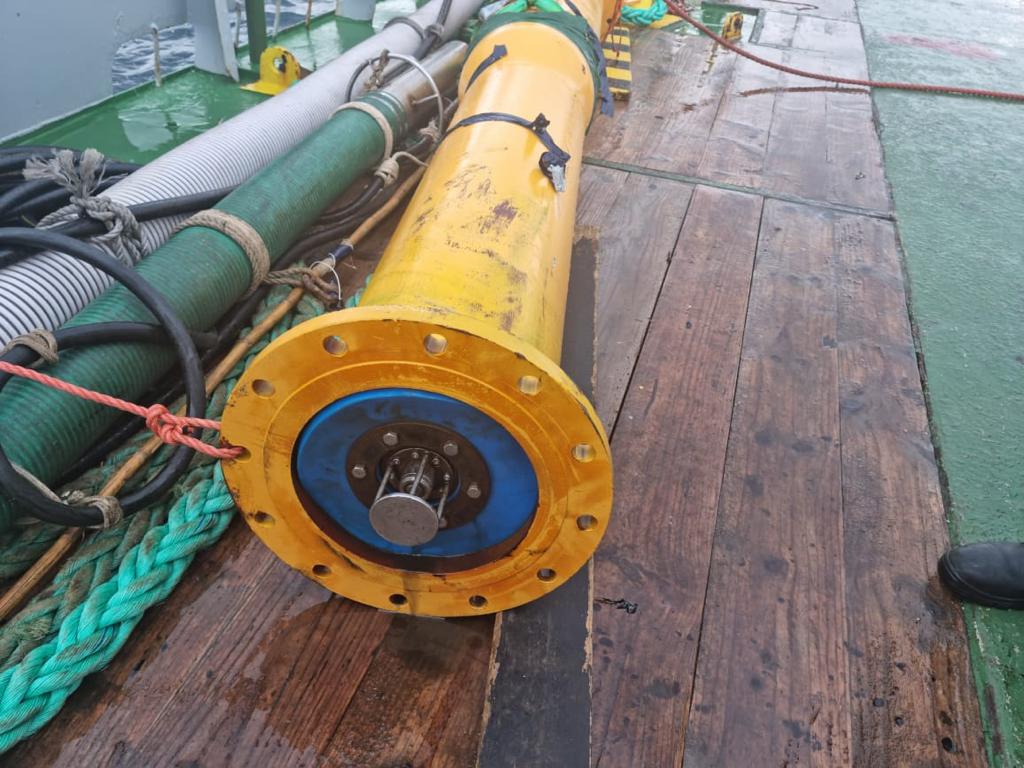
The inspection tool was launched successfully and travelled from launcher to receiver. On completion of the run, the tool was received in good mechanical condition and the onboard computer was checked.
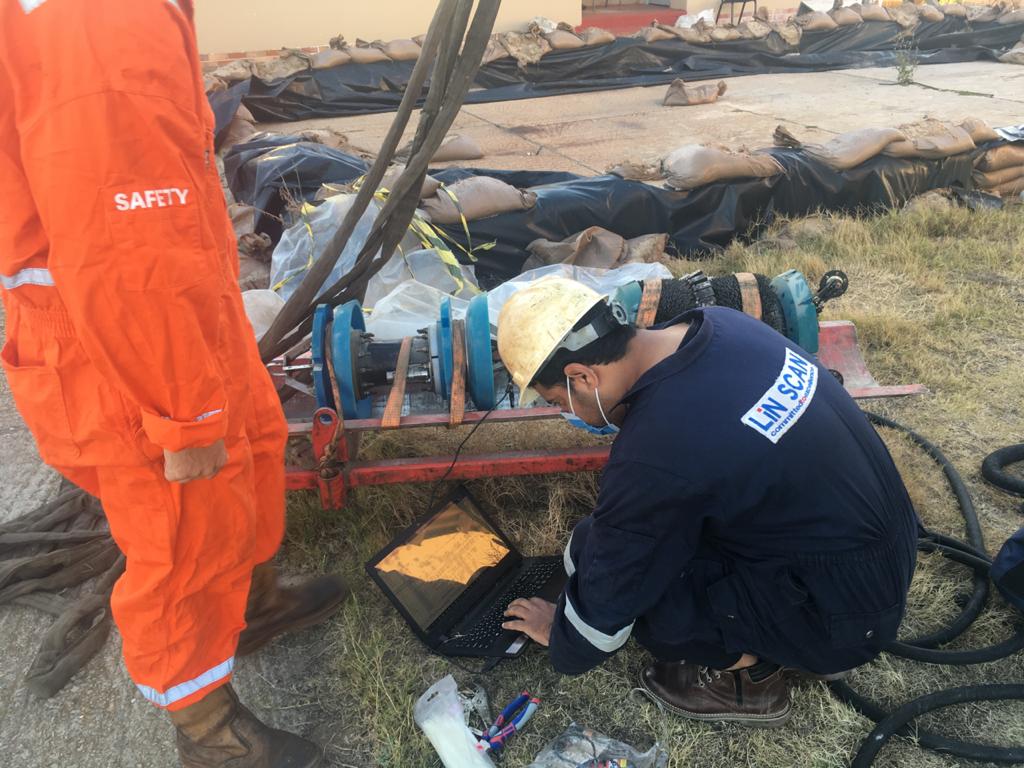
The tool recorded data across 3,374 m of pipeline length. The field team also processed key operational information, including velocity, temperature, and magnetisation data.
Data Quality and Reporting
After the tool was received, the collected inspection data was downloaded and sent to LIN SCAN’s head office for comprehensive data quality assessment.
The data analysis team confirmed that the data quality was acceptable for further analysis. This allowed the project to progress to detailed assessment and reporting, including pipeline condition review, fitness-for-purpose input, and repair recommendations where required.
Project Outcome
The intelligent pigging campaign was completed successfully. The pipeline was cleaned, gauged, inspected, and recorded from launcher to receiver. The inspection tool remained in good condition before and after the run, and the collected data was accepted for further analysis.
The project provided PetroSA with reliable inspection data to support informed pipeline integrity and maintenance planning for the 14-inch diesel pipeline.
Conclusion
The Mossel Bay intelligent pigging project demonstrated OSC Marine’s ability to support pipeline inspection campaigns through project management, field coordination, specialist inspection support, and technical reporting.
By combining careful preparation with HR-MFL inspection technology, the project delivered a strong foundation for pipeline condition assessment and future integrity planning.